
Eight weeks to the JLPT: what to buy — and what to skip
For everyone registered for December 6, 2026 and staring at a bookstore page. Updated for this sitting.
The short version
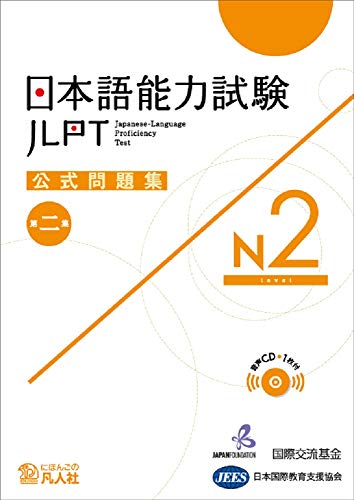
With eight weeks left, don't start anything rigorous — an unfinished serious book is worth less than a finished light one. Sit the Official Practice Workbook timed this week (¥700 + tax), let the per-section score name your one real weakness, and patch exactly that: So-matome's daily calendar at N4–N2, timed past papers at N1, your unfinished course at N5–N4. Everything else on your wishlist can wait until December 8.
01
First: the ¥700 calibration everyone skips
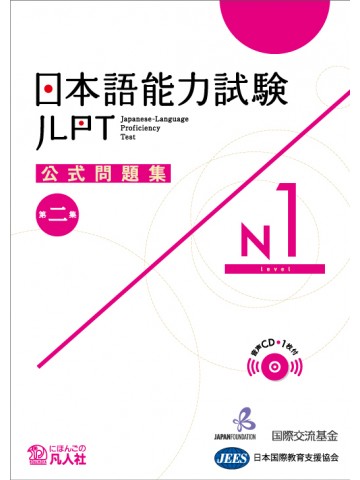
Eight weeks out, the most valuable purchase is also the cheapest one: the Official Practice Workbook for your level — one full test's worth of real past questions from the exam makers, ¥700 + tax at every level. Sit it timed, in one block, this week, and score it by section. That score is the whole strategy: it names the one section that deserves your remaining weeks, and it tells you whether a December pass is realistic at all. Every drill book bought before this calibration is a guess about your own weaknesses.
If the timed score lands far from pass range, the honest play is not panic-buying — it's aiming at July 2027 and keeping your weekly pace. Our JLPT roadmap quiz does that arithmetic with published study-hour data.
02
N5–N4: your course is still the answer
At these levels the exam tests the ground your beginner course covers — so with eight weeks left, finishing Genki or Minna beats buying anything new. Learner communities are consistent that a finished beginner course reaches pass range; the gaps it leaves (vocabulary volume, listening) are habits, not purchases.
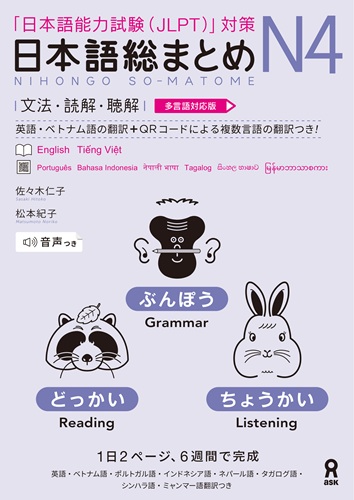
The one exception, straight from our N4 guide: if your course is already finished, So-matome's combined N4 volumes fit a six-week runway exactly — with the honest caveat that at this level the seriesreminds, it doesn't teach. Right tool for a finished course, wrong tool for an unfinished one.
03
N3–N2: switch to the calendar, not the canon
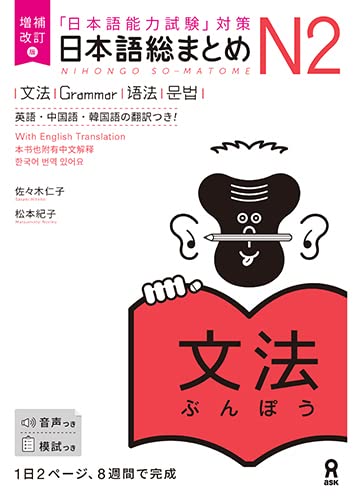
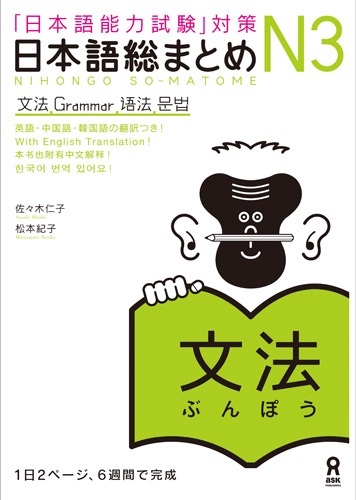
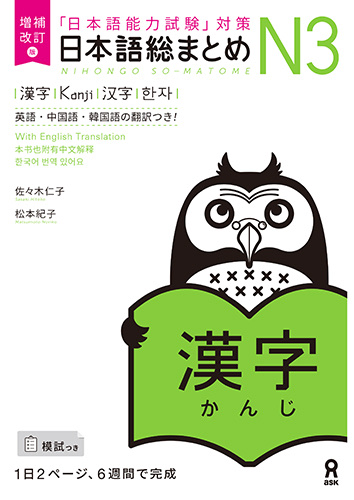
This is where the most money gets wasted in October. The serious series everyone recommends — Shin Kanzen Master — is the right answer with a long runway and the wrong one now: six to eight weeks is not enough time to work through it honestly.Nihongo So-matome is built for exactly this window: each volume is a printed daily calendar ("two pages a day" is on the cover), with translated glosses so you never stall on an explanation. Accept the documented trade-off — it covers the ground faster but shallower — because on this runway, that is a price worth paying.
The buying rule from our N2 and N3 guides: Grammar plus the volume for your weakest section (that's what the timed workbook told you). At N3, if kanji is what lags — common straight out of a beginner course — make it the Kanji volume, the one book in the So-matome N3 set that learners rate highest.
04
N1: the calculus flips to past papers
At N1 the material is too large to cram, so the highest-value hours go to timed passes through real questions, not to new teaching. Start with the Official Practice Workbook, score it by section, and spend the remaining weeks on whatever bled points. The rule of thumb learner communities use: average around 120 of 180 on timed past papers before test day. So-matome still has a role — as the review layer for ground you've already covered, never as the teacher. The full reasoning lives in our N1 guide.
05
What NOT to buy with eight weeks left
The costliest October purchases, per the judgments across our level guides: a full Shin Kanzen Master set (six volumes you cannot finish — buy one volume for a proven gap, or none), a new textbook course (no course finishes in eight weeks), kanji books at N1 (by N1, kanji study is vocabulary study in disguise), andanything bought before the timed calibration. Listening deserves the opposite treatment — it's a habit, not a purchase: daily learner-paced audio from today, the workbook's audio under real timing at the end. If self-discipline is the failing part, a standing weekly conversation lesson on italki or Preply is live listening you can't skip or replay.